Home›About›Ten years with Terry

2011 to 2021

Ten years with Terry

Dr Terence Palmer took the first doctorate in Britain in the scientific study of spirit release. I am a psychic surgeon who works with a spirit guide. On paper we should not have got on.

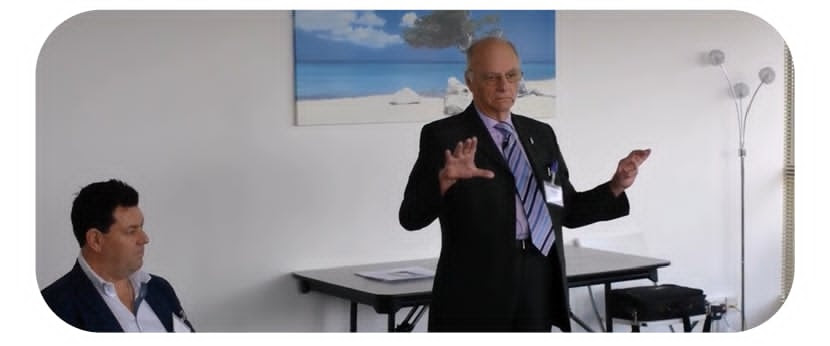
Dr Terence Palmer PhD and Andy Porter teaching SRT classes to practitioners
Dr Terence Palmer PhD and Andy Porter teaching SRT classes to practitioners.

How the work began

I first began working with Terry in 2011.

By then he had already spent years examining spirit release therapy, psychology, hypnosis, dissociation, possession and psychical research. I had been working with Chen since 2004 through psychic surgery and spiritual work. When we came together, those two paths met.

What followed was not Terry teaching me a protocol, and it was not me showing Terry a spiritual technique. We worked together. He brought the academic and research background, his understanding of spirit release and hypnosis, and a determination to document what actually happened. I brought the practical experience of working psychically and remotely. Chen became central to how the method developed.
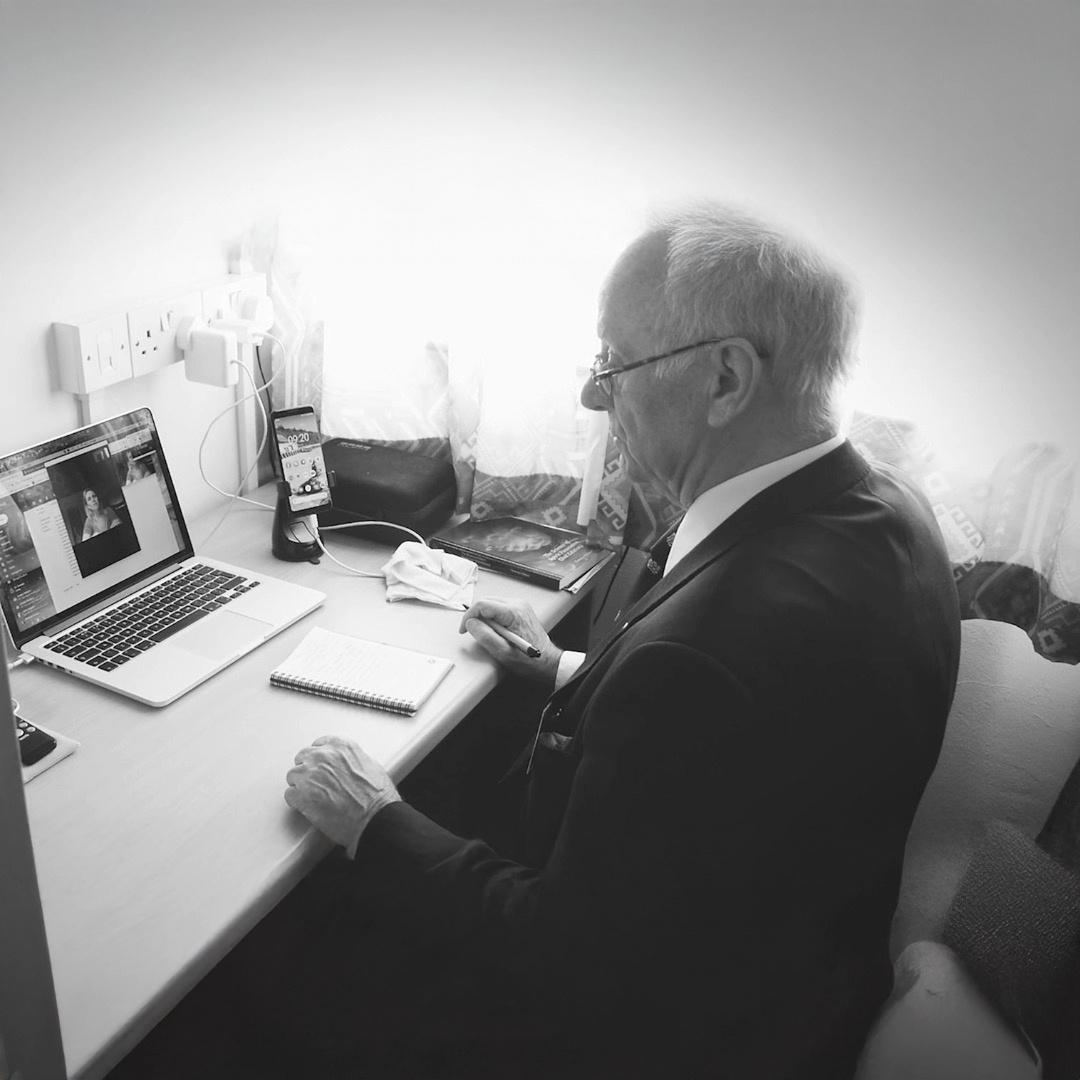
Black & white photo of Dr Terence Palmer PhD in his office

Dr Terence Palmer PhD.

The approach

What Terry was after

What made Terry unusual was that he wanted to investigate these experiences rather than ask people to believe in them.

His major academic work was his 2012 PhD thesis at Bangor University, A Revised Epistemology for an Understanding of Spirit Release Therapy Developed in Accordance with the Conceptual Framework of F. W. H. Myers. He examined spirit release alongside Myers’ work on dissociation, hypnosis, altered states, telepathy and secondary personalities, arguing that conventional frameworks did not necessarily explain every unusual human experience, and that a broader method of investigation was needed.

That mindset shaped everything we did. Terry wanted cases recorded. He wanted the presenting symptoms identified, the intervention described, and the outcome documented. He was always looking for patterns, and for ways that subjective spiritual experience might be examined more systematically.

He was never afraid of difficult questions. We did not agree on everything, and that was part of the value of working together.

Chen’s role

Chen had been working with me since 2004, before I met Terry. As the work developed, Terry came to recognise how important the guide was to the remote process.

The method was never about a practitioner deciding what was present and then attempting to remove it. Terry’s protocol describes the principal spirit guide as the third member of the remote team, alongside the facilitator and the medium. The human side facilitates, questions, observes and records. The guidance comes from the spiritual side.

That was one of the harder disciplines to hold to. Our job was not to dominate the intervention. It was to run the process correctly, ask the right questions, watch what happened, and let Chen direct what was needed.

The three part team

The method settled into three distinct roles.

The facilitator

Keeps conscious oversight of the session, directs the questioning and holds the structure.

The medium, or scanner

Works in an altered state and reports what is perceived.

The spirit guide

Provides the guidance within the spiritual part of the procedure.

Separating those roles mattered. It stopped the work becoming an uncontrolled psychic exercise. Terry was explicit that inexperienced practitioners should not attempt the remote procedure alone, and that the facilitator carries real responsibility for the medium’s safety, focus, and return to ordinary awareness.

It was built out of cases

We did not begin in 2011 with a finished protocol. We learned through cases.

Each one could present something different, and those differences taught us what needed checking, what questions needed asking, and how the procedure could be made safer and more consistent. Terry’s own protocol anticipated that it would evolve as different cases presented different problems. That is exactly what happened.

The pattern was always the same. Work a case. Examine what happened. Discuss it. Terry would consider how the observation sat against his research and the existing spirit release literature. I would bring what I had experienced working with Chen. Slowly the protocol became more structured as repeated observations showed which stages mattered.

Writing it down

Terry’s contribution to case recording was fundamental, and it is the part of his legacy that gets least attention.

He built a structured system that separated confidential information, presenting symptoms, the method of intervention, and the remedy and outcome. Symptoms were considered across mental, emotional, behavioural and physical categories. Interventions were distinguished between intuitive, interactive, direct interactive, remote and group methods. The outcome section recorded what had been done and what happened afterwards.

The effect of that was simple but significant. A case stopped being an interesting spiritual experience that somebody remembered, and became part of a body of material you could look at for patterns.

In a field with centuries of anecdote and almost no records, that is not a small thing.

Working at a distance

Terry also spent considerable time on telepathic hypnosis. In 2014 he presented Telepathic Hypnosis, The Neglected Concept to the Society for Psychical Research, arguing that historical research into hypnosis and telepathy deserved renewed scientific attention.

For us the relevance was obvious. Remote Spirit Release was remote. The person being worked with did not need to be in the room, and often did not know the session was happening at all. Terry wanted the mechanism of influence at a distance investigated rather than dismissed for not fitting the prevailing model.

That mattered practically as well as theoretically. A great many of the people who most needed this work could not or would not attend anything, because they were too unwell, too far away, or too certain nothing would help. Working remotely meant a family member could ask on their behalf.

Jonno joins, 7 January 2019

On 7 January 2019 Jonno Webster joined the mediums team.

That date matters more than it looks. Until then the research depended on the perceptions of a single medium, which is a real limitation and Terry knew it. A second experienced medium meant observations could be compared rather than taken on one person’s word.

Jonno later co-founded the Spirit Release Academy with me.

472 cases

Later in 2019 Terry presented Remote Spirit Release to the Society for Psychical Research, including an overview of 472 recorded cases.

472recorded cases, presented to the Society for Psychical Research in 2019

That presentation matters to me because of what it showed about how far the work had come. He was no longer describing an idea or a proposed experiment. He was presenting Remote Spirit Release as an approach that connected research, training and practical intervention, supported by a substantial body of documented case material, in front of an audience perfectly capable of taking it apart.

We carried on working after that, with Jonno contributing to the mediums team, and the body of documented cases continued to grow.

A timeline

How the decade ran

Timeline of the work with Dr Terence Palmer, 2004 to 2023
YearWhat happened
2004I begin working with Chen.
2008Terry’s Are They Evil, Mad or Possessed? sets out a remote spirit release research methodology.
2011Terry and I begin working together, with Chen central to the practical work.
2012Terry completes his PhD thesis at Bangor University.
2014Terry presents Telepathic Hypnosis, The Neglected Concept to the Society for Psychical Research.
7 Jan 2019Jonno Webster joins the mediums team.
2019Terry presents Remote Spirit Release to the SPR, including 472 recorded cases.
2021Terry publishes a late essay on the survival of consciousness. He dies on 31 December.
2023Jonno and I launch the Spirit Release Academy.

Terry’s wider work

Remote Spirit Release was only one part of what he was doing.

He investigated auditory hallucinations and hearing voices, hospital experiences, earthbound spirits, fear, domestic abuse rehabilitation, and the survival of consciousness, alongside the relationship between psychological and spiritual explanations of unusual experience.

He put those ideas repeatedly in front of academic and psychical research audiences who might disagree with him, and invited the argument. He was interested in evidence, and he was equally interested in questioning what counted as evidence, and whether existing methods were even capable of detecting what was being investigated.
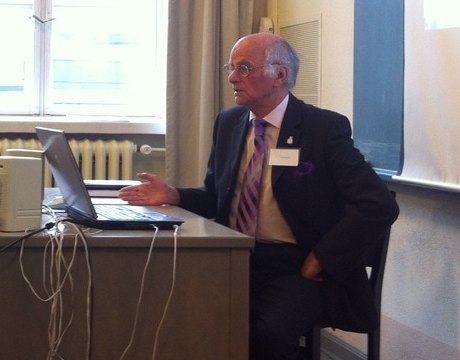
Dr Terence Palmer PhD seated at a laptop, presenting his research to a conference audience
Terry presenting his research on spirit possession. He took the argument to academic and psychical research audiences rather than around them.

The end

Terry published a late essay on the survival of consciousness in 2021. He went into hospital with Covid at the end of that year and fought it for a couple of weeks. He died on 31 December 2021.

What he left

Terry left far more than a protocol. There is the PhD thesis, the research proposals, the conference lectures, the books, the case studies, the recording forms, and a large body of thinking about spirit release.

For me, though, the greatest part of it is the work itself. A decade of testing ideas against cases and letting the method change when the cases said it should.

After he died the job became preserving what we had learned while continuing to develop it. Spirit Guided Remote Spirit Release grew from that foundation, and in 2023 Jonno and I launched the Spirit Release Academy to teach it. But Terry’s original papers still matter, because they show where the work came from.

When I look at the protocol now I do not see something that was invented. I see ten years of cases, conversations, experiments, mistakes and refinement. I see Terry’s academic mind working against the practical spiritual work Chen and I were doing, and later Jonno’s contribution alongside it.

He would not have wanted a tribute page. He would have wanted the next thousand cases documented properly.

Please read this

This work sits alongside medical care, never instead of it

If you or someone you love has been diagnosed with a mental health condition, please keep working with your doctor and your mental health team.

We are not medically trained. We do not diagnose, we do not treat medical or psychiatric conditions, and we will never advise anyone to stop or change prescribed medication. Nothing on this page is medical advice.

Many families come to us after years of treatment that has not helped as much as they hoped. We understand that. But this work sits alongside medical care, never instead of it. If someone is in crisis, please contact your GP, your local crisis team, or emergency services. In the UK, Samaritans are on 116 123, day or night.