Schizophrenia & Hearing Voices

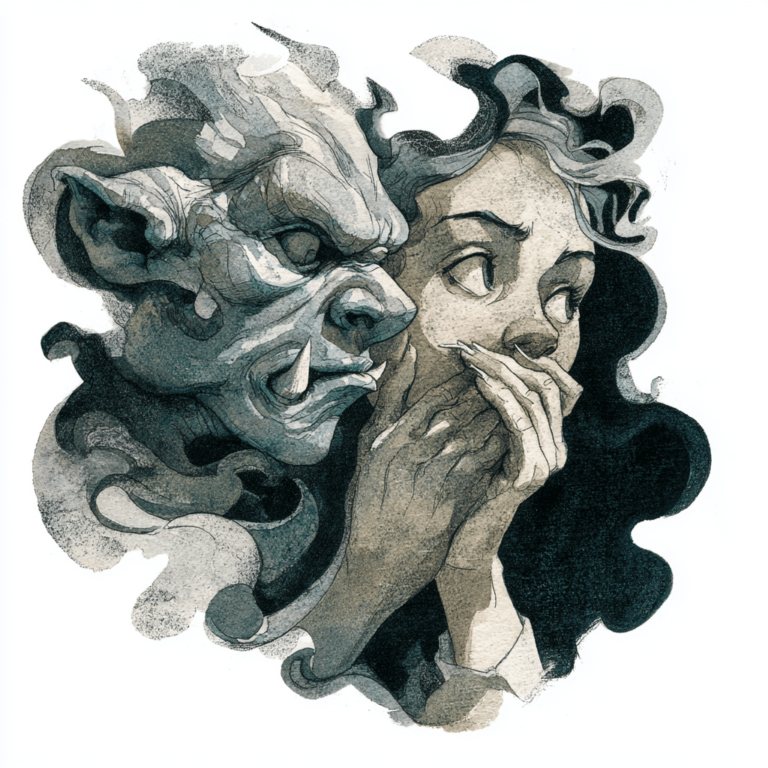
For many people, hearing voices is not an illness of identity, but an experience of negative spiritual interference, one that spiritual intervention can help resolve.
Andy Porter Tweet
Hearing voices in your head can be an extremely distressing and life-altering experience.
For many people, it affects daily functioning, sleep, emotional stability, relationships, and their sense of identity or safety. It can feel isolating, frightening, and confusing, especially when the voices are persistent, intrusive, critical, or hostile.
While this experience is commonly approached through a medical or psychological lens, many individuals report that these explanations alone do not fully account for what they are experiencing, nor do they always bring lasting relief. This has led to growing recognition that, for some people, there may be additional non-physical or spiritual factors involved.
In spiritual traditions across cultures and throughout history, hearing voices has often been understood as a form of negative external spiritual influence rather than an internal flaw. From this perspective, the voices are not seen as “who you are,” but as something affecting you.
Spiritual intervention approaches work by:
Exploring whether the voices are linked to external negative spiritual influences and entities.
Restoring a person’s sense of sovereignty, safety, and personal boundaries.
Removing influences that do not belong to the individual.
Supporting emotional and energetic stabilisation and integration.
When carried out ethically and responsibly, spiritual intervention does not require belief, does not involve force, and does not replace medical or psychological care.
Instead, it can act as a complementary pathway, particularly for those who feel unheard, stuck, or unchanged by conventional approaches alone.
For many people, recognising that the voices are not their fault and not who they are can be profoundly relieving.
With the right support, it is possible to reduce distress, regain clarity, and reconnect with a stronger sense of self and inner calm.
If you are experiencing voices, help is available, and you are not broken, weak, or beyond support.
Common Symptoms of Schizophrenia. Auditory Voice Hallucinations (AVH)
- People hearing voices or having intrusive thoughts know that the voices they hear are not their own.
- There can be more than one voice, and they chatter away all day and all night, they cannot be stopped.
- People that are hearing voices will be irritable, anxious, depressed, tired and fearful.
- People hearing voices will know the thoughts are wrong and not coming from their own mind.
- Some people can actually see either spirits or negative entities that are talking to them and this will be very scary.
- Changes in behaviour will be noticed by close members or the person’s friends or family, such as change of dress sense, change of eating or drinking habits, drug-taking, alcohol abuse, etc.
- Self-medication is very common as substance abuse can temporarily stop the voices as the conscious mind is blocked.
- Other symptoms will be unexplained fatigue, depression, addictions, anxiety, physical symptoms, chronic illnesses, and sudden mood changes.
- Hearing voices, Hallucinations, Delusions, Racing thoughts, Apathy, Lack of emotion.
- Disorganized thoughts, Memory problems, Oversleeping or insomnia.
- Odd or irrational statements, Forgetful; Unable to concentrate.
- Extreme reaction to criticism, Strange use of words.
- Speaking in a different language, not their first language.
- Deterioration of personal hygiene, Flat, expressionless gaze.
- Inability to cry or express joy. Inappropriate laughter or crying.
- Depression, Anxiety, Concentration issues, Social withdrawal
- Hostility
Why do people hear voices?
People who experience hear voices “auditory hallucinations” and have intrusive thoughts are often diagnosed as having a mental illness by the medical profession.
Some of these people can have a long-term mental disorder of a type involving a breakdown in the relation between thought, emotion, and behaviour, leading to faulty perception.These people might then be treated according to specific therapeutic protocols or treatment guidelines, and be labelled as suffering with a chronic illness like paranoid schizophrenic.
For many people that experience hearing voices and intrusive thoughts this seems to happen after some type of substance abuse such as alcohol, drugs both medical and recreational. Many also start hearing voices after spiritual practices such as meditation or ritual invocations that don’t invoke the correct type of spiritual protection opening the etheric field to some type of negative attachment.
Andy Porter Psychic Surgeon Tweet
We have many clients that have started using Ouija boards for fun, and after a period of time, they have opened themselves upon the spiritual level, attracting some type of non-physical energy that seems to attach to them and follow them around. This could be a disincarnate spirit (once-living person) or some type of negative entity (demon, Jinn, etc).
Many people who are hearing voices and having intrusive thoughts are able to see and communicate with Spirits, Demons, or other non-physical entities.
This is exactly the same as spiritual mediums and psychics, the only difference being that a spiritual medium or psychic has learned how to protect themselves from negative energy and tends to communicate with a spiritual guide.
Spiritual mediums and psychics can control their thoughts and only hear specific non-physical positive voices as they choose, using spiritual protection and intention.
Mediums and psychics also hear voices.
However, the type of conversation appears to be different.
They appear to hear positive voices and rarely hear negative or dark voices.
Mediums and psychics have been hearing voices for hundreds of years. It is accepted that many religious leaders and members of the monarchy communicate with their chosen deity with the help of mediums and psychics.
Why is it acceptable to attend spiritual shows and churches at which mediums and psychics perform and appear able to speak with deceased relatives?
Are all mediums and psychics mentally ill because they hear voices?
This is the only real difference between a spiritual medium and a person hearing voices. The medium is in control of the conversation, whilst a regular person cannot control the intrusive thoughts and voices they hear.
In my experience as a psychic surgeon, the main reason a person hears voices and has intrusive thoughts is that their etheric field has been penetrated by non-physical entities.
These non-physical entities can then use telepathy to engage the person directly with thought-based communication.
How can I detach these entities?
This is the real question everyone asks and needs to fully understand before making choices. I have been working for over two decades now as a spiritual medium and psychic surgeon alongside the eminent Dr. Terence Palmer PhD.
Dr. Palmer travelled the world presenting his evidence that non-physical energies are the cause of many mental health conditions, including schizophrenia as a spirit possession problem.
He presented many of his papers at psychiatry conferences around the world with the clear intention of sharing his findings, opening dialogue, and constructively engaging with the global psychiatric community. Building on this work, we now actively perform spiritual clearings to support clients who are suffering, applying the methods developed through years of research and clinical observation.
These same pioneering approaches, developed by myself, spirit guide CHEN in collaboration with Dr Terence Palmer PhD, are now formally taught through the Spirit Release Academy (SRA), where practitioners are trained to apply the protocol ethically, responsibly, and with a strong emphasis on client safety and spiritual sovereignty.
Self Help Techniques
If you believe that you, or someone you care about, may be experiencing spirit or entity attachment, it can understandably feel unsettling or confusing. Before seeking professional assistance, there are a number of simple, supportive steps you may choose to try for yourself, should you feel comfortable doing so. These approaches are intended to help stabilise your environment, strengthen your sense of safety, and restore balance.
One option is to contact a trusted psychic or intuitive practitioner and ask them to check for possible spirit or entity attachments. If you choose to do this, ensure the person is reputable, grounded, and works ethically, without creating fear or dependency.
Supporting the physical body is also important. Drink plenty of water, as hydration plays a key role in regulation and clarity. Water is often viewed symbolically as carrying light and flow, and maintaining good hydration can help the body detoxify and feel more settled. Some people also choose to work with gentle herbal supports. For example, ivy has traditionally been regarded as a protective herb and is widely available, though any herbal use should be approached with common sense and moderation.
Creating a calm, clear environment can be helpful. Burning incense sticks may assist in refreshing the space you spend time in, as incense is traditionally made from herbs and resins associated with cleansing and grounding. Ensure the area is well ventilated and that you feel comfortable with the scent and practice.
Spending time in quiet meditation can help restore a sense of inner stability. During meditation, you may choose to ask your spirit guides, higher self, or inner wisdom for support and protection. This does not require special abilities, simply a calm intention and willingness to pause and breathe.
Regular use of affirmations and visualisations can also be beneficial. These practices help reinforce personal boundaries and sovereignty. For example, visualising yourself surrounded by a calm, protective light and affirming your right to peace and safety can be grounding when practised consistently.
If you are engaging in recreational drug use or excessive alcohol consumption, it is strongly advised to stop. These substances can reduce clarity, weaken emotional boundaries, and make it harder for the body and mind to stabilise, often increasing feelings of vulnerability.
Traditional grounding practices may also be used. Sprinkling sea salt around your home, and particularly around your bed, is considered by many traditions to be a protective and stabilising measure. This is often viewed as an important step for creating a sense of safety during rest.
Finally, small environmental adjustments can help promote calm. Leaving a light on at night may reduce anxiety and promote a feeling of security. Playing gentle classical music in your home can also help regulate mood, soothe the nervous system, and create a peaceful atmosphere.
If distress continues, intensifies, or begins to interfere significantly with daily life, seeking professional support, spiritual, medical, or psychological, is an important and responsible next step. You do not have to face these experiences alone.